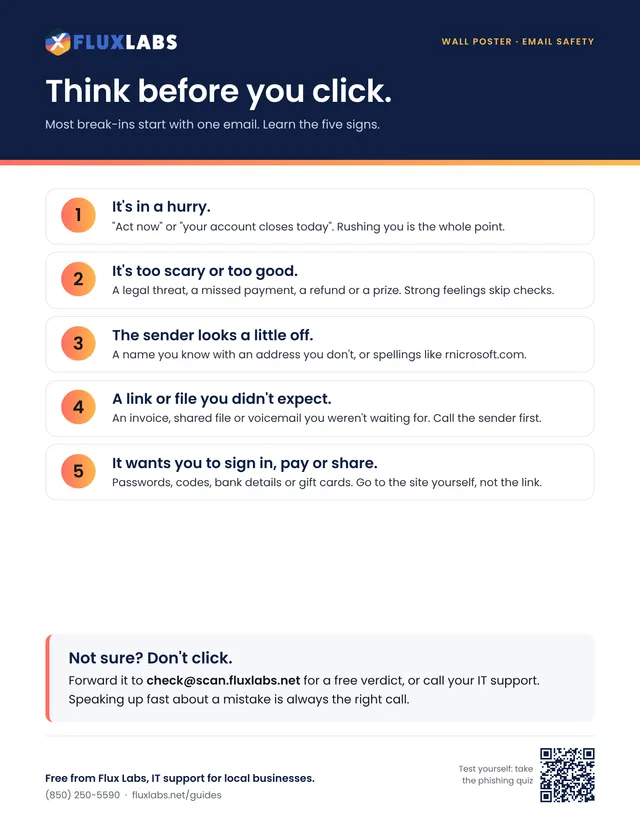
Think before you click
Most break-ins start with one email. Learn the five signs.

Guide · Scams and email
A few seconds of someone's voice is now enough to copy it. Here's how to protect your business and your family.
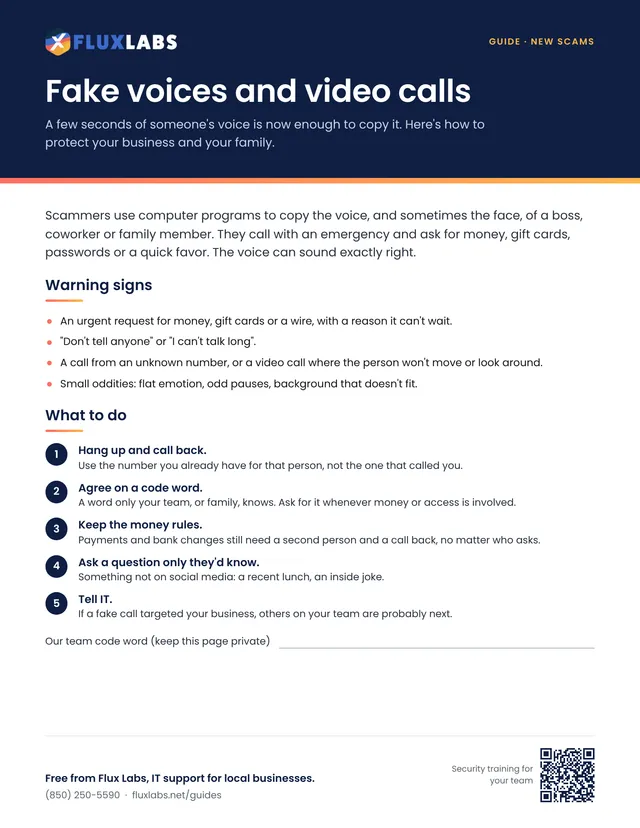
One page, US Letter, in color. Tick the boxes and type on the lines right in your browser or PDF reader, then save or print it.
Filling in online works in Chrome, Edge, Safari and Adobe Reader. Your answers stay on your computer.
Want all 34? Get the whole pack by email or browse the library.
What's inside
Scammers use computer programs to copy the voice, and sometimes the face, of a boss, coworker or family member. They call with an emergency and ask for money, gift cards, passwords or a quick favor. The voice can sound exactly right.
Use the number you already have for that person, not the one that called you.
A word only your team, or family, knows. Ask for it whenever money or access is involved.
Payments and bank changes still need a second person and a call back, no matter who asks.
Something not on social media: a recent lunch, an inside joke.
If a fake call targeted your business, others on your team are probably next.
Scams and email
Most break-ins start with one email. Learn the five signs.
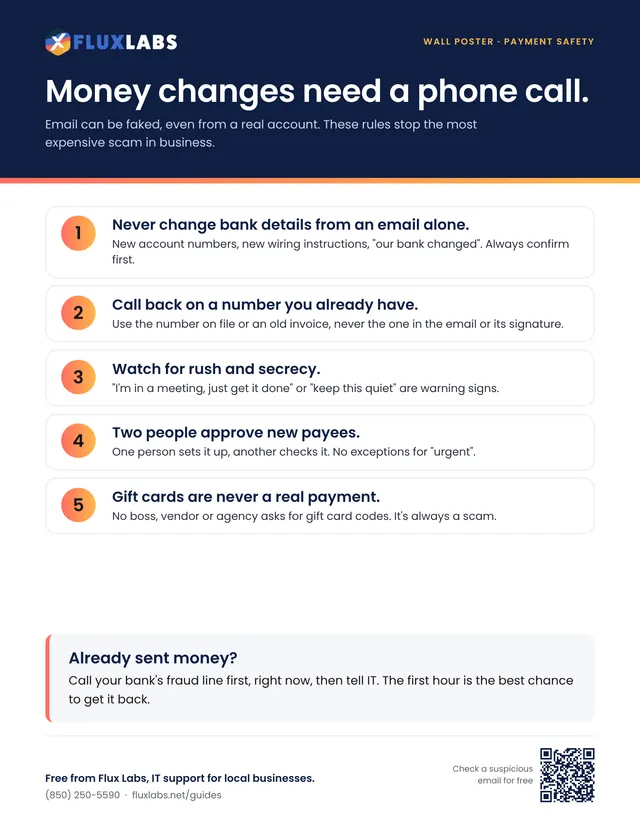
Email can be faked, even from a real account. These rules stop the most expensive scam in business.
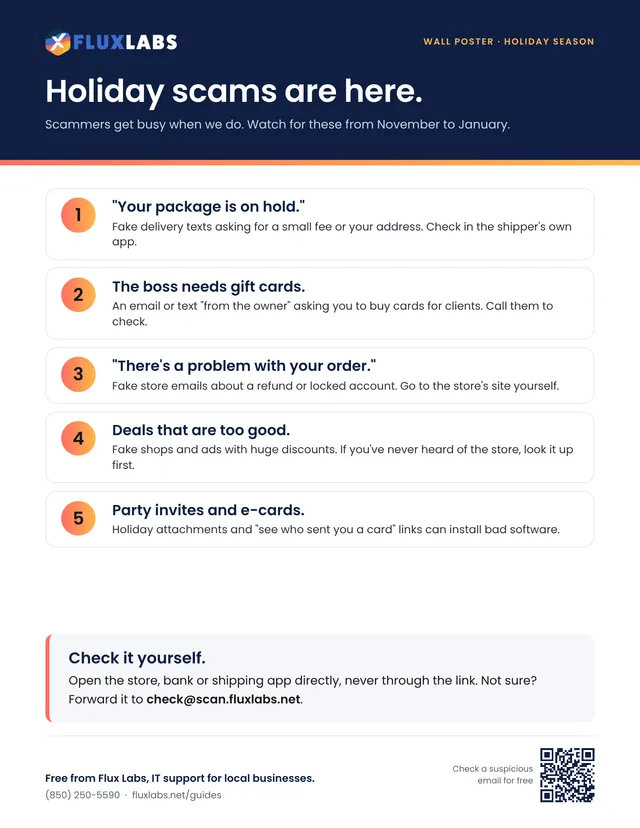
Scammers get busy when we do. Watch for these from November to January.
Our team helps local businesses with exactly this every day. A 15-minute call is free.