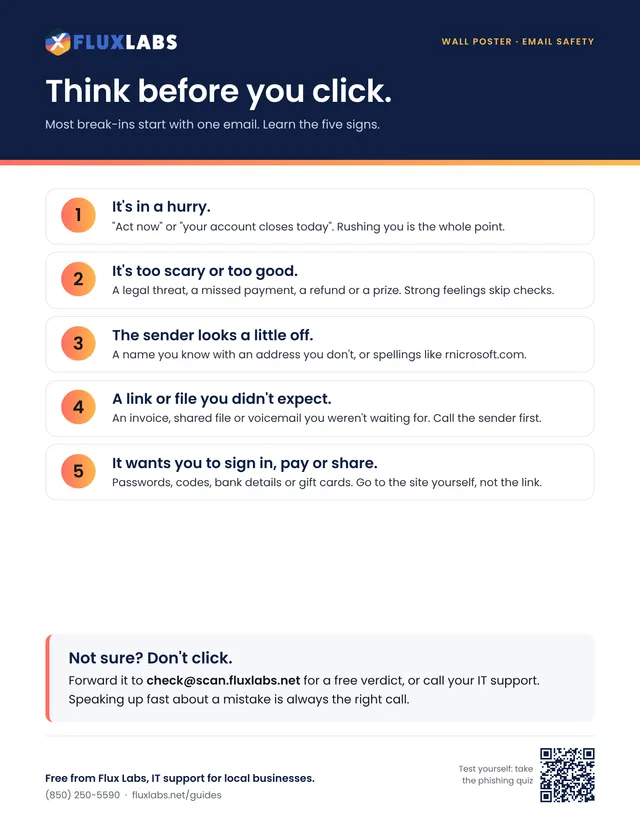
Think before you click
Most break-ins start with one email. Learn the five signs.

Guide · Scams and email
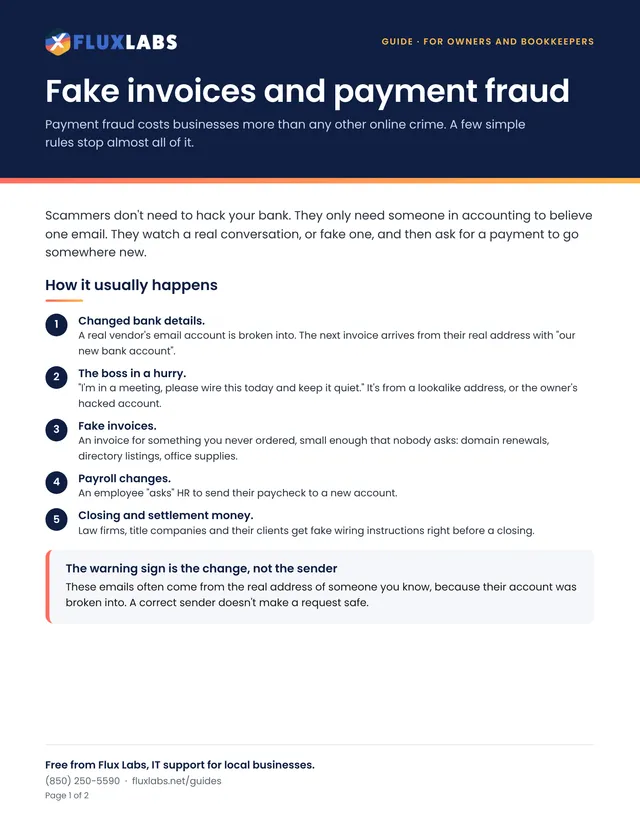
Payment fraud costs businesses more than any other online crime. A few simple rules stop almost all of it.
2 pages, US Letter, in color. Tick the boxes and type on the lines right in your browser or PDF reader, then save or print it.
Filling in online works in Chrome, Edge, Safari and Adobe Reader. Your answers stay on your computer.
Want all 34? Get the whole pack by email or browse the library.
What's inside
Scammers don't need to hack your bank. They only need someone in accounting to believe one email. They watch a real conversation, or fake one, and then ask for a payment to go somewhere new.
A real vendor's email account is broken into. The next invoice arrives from their real address with "our new bank account".
"I'm in a meeting, please wire this today and keep it quiet." It's from a lookalike address, or the owner's hacked account.
An invoice for something you never ordered, small enough that nobody asks: domain renewals, directory listings, office supplies.
An employee "asks" HR to send their paycheck to a new account.
Law firms, title companies and their clients get fake wiring instructions right before a closing.
These emails often come from the real address of someone you know, because their account was broken into. A correct sender doesn't make a request safe.
Ask them to recall the payment. The first few hours matter most.
They can check whose email was broken into and lock it down.
The FBI's internet crime center can sometimes help freeze the money.
Many cyber and crime policies cover this, but only if you report it quickly.
Scams and email
Most break-ins start with one email. Learn the five signs.
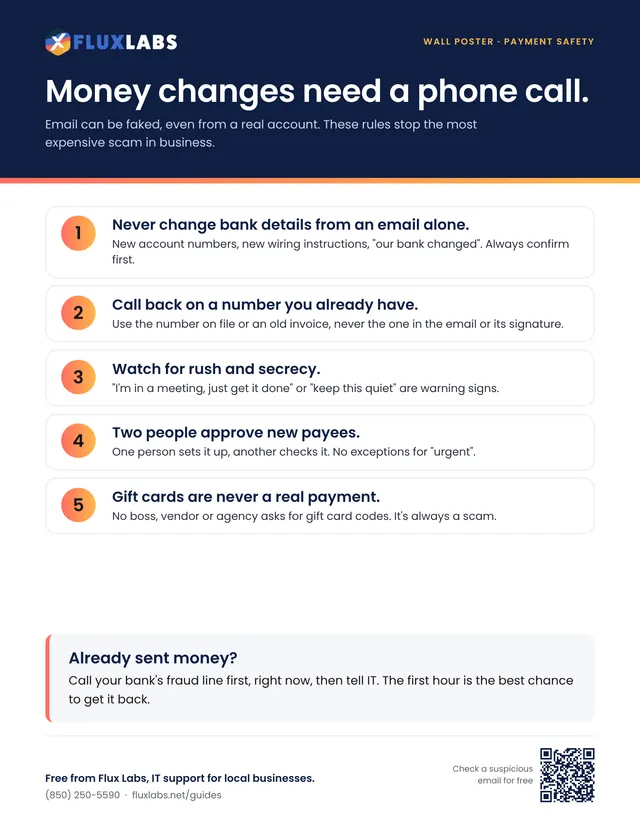
Email can be faked, even from a real account. These rules stop the most expensive scam in business.
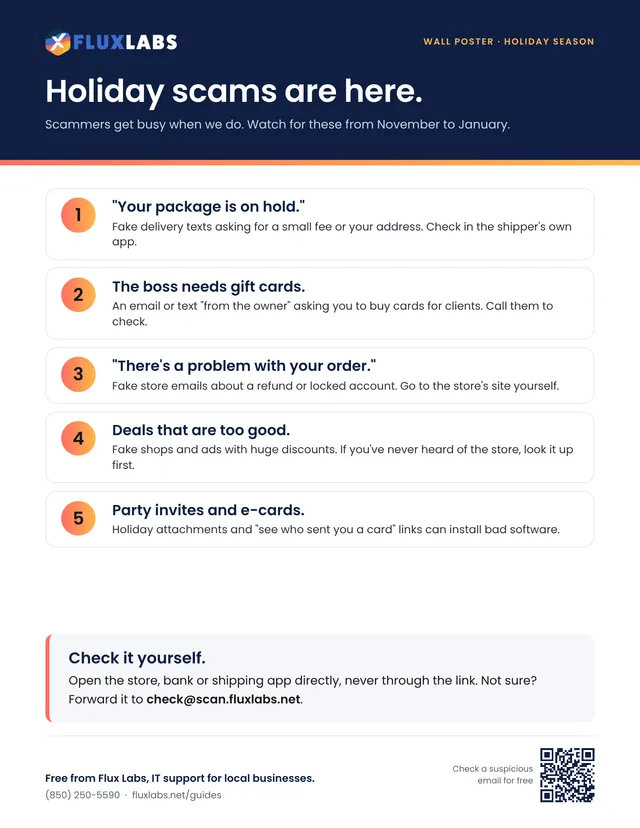
Scammers get busy when we do. Watch for these from November to January.
Our team helps local businesses with exactly this every day. A 15-minute call is free.