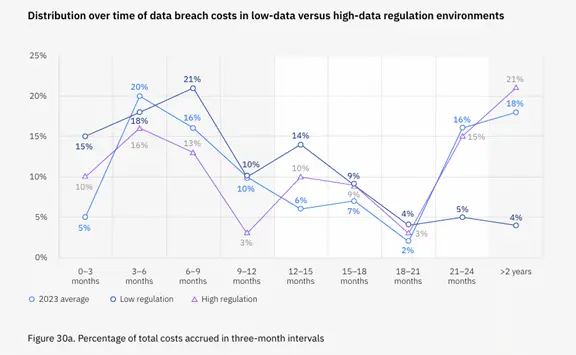
The cost of a data breach doesn’t stop after the first year—only 51% hits in year one, with the other 49% arriving later. That long tail shows up as fines, legal action, lost trust, operational slowdowns, and tougher customer growth, as seen in a real case below.
Data keeps your company moving—serving customers, running operations, and guiding decisions. But when that data is exposed, the damage can follow you for a long time. According to IBM’s Cost of a Data Breach Report, just 51% of breach costs land in the first year. The remaining 49% surface in year two and beyond.
Below, we break down why the impact drags on, and we highlight a real-world example that shows how expenses can keep coming long after the headlines fade—even for large firms. The lesson applies to small and mid-sized businesses too, including offices around Panama City.
A Real Example: Penalties Years After the Incident
Consider the 2019 breach at First American Title Insurance Co. In fall 2023, the New York Department of Financial Services (NYDFS) announced a $1 million penalty tied to that event, citing failures to protect sensitive consumer data. The exposure involved more than 880 million documents containing personal and financial information. It’s a clear reminder that the meter keeps running long after an initial breach.
Why the Cost of a Data Breach Lasts for Years
Financial fallout that doesn’t end with cleanup
There are immediate costs—finding and containing the breach and notifying affected people. But long-term expenses often eclipse the early bills. Companies can face regulatory fines, legal claims from individuals, and even class-action suits. These matters unfold over months or years, extending the total cost far past year one.
Trust and reputation take time to rebuild
When customers doubt your ability to keep their information safe, they leave—and potential customers think twice. Repairing a damaged brand requires patience and consistent action, from clear communication to visible security improvements. The market’s memory can be long.
More oversight and tighter rules
After a breach, expect more attention from regulators. Investigations can lead to penalties and ongoing obligations to prove you’re meeting cybersecurity standards. That extra scrutiny often brings continuous audits and mandated upgrades, which add cost and effort over the long haul.
Operational strain across the business
Responding to a breach isn’t just an IT task. Teams across departments get pulled into remediation, system hardening, and new process rollouts. That diversion slows projects and day-to-day work, reducing productivity and delaying growth initiatives well beyond the initial incident.
Customer churn and slower new sales
A public breach can push existing clients to move on and make prospects reluctant to sign. Winning back confidence takes time, so the revenue impact can linger and affect competitiveness for years.
What This Means for Your Business
The real price tag of a breach is more than the first wave of invoices. It’s a mix of penalties, legal exposure, brand damage, operational disruption, and customer loss that can stretch over multiple years. With threats growing in frequency and sophistication, strengthening your defenses is a strategic move—not just an IT task.
Reduce Risk Before It Spreads
Attackers look for openings anywhere: from computers and devices to cloud apps. A clear-eyed assessment helps you spot gaps and prioritize fixes so you can lower the chance—and the long-term cost—of an incident.
Sources and further reading
If you want a plain-English review of your security posture and next steps for your office in Bay County, get in touch. We’re here to help.