Looking to reduce data breach costs? Four moves make the biggest difference: use a hybrid cloud, build and practice an incident response plan, adopt zero trust security, and add security AI and automation to your toolkit.
No one wants a breach, but today it’s hard to avoid every single threat. In fact, 83% of organizations have been hit more than once (IBM Security 2022 Cost of a Data Breach Report). The damage isn’t just technical cleanup. There’s downtime, lost sales, shaken customer trust, and potential legal bills.
IBM’s latest numbers show the average global breach at $4.35 million, up 2.6% from the prior year. In the U.S., it jumps to $9.44 million. In Canada, it averages $5.64 million (IBM Security). Smaller companies may see lower dollar figures, but the hit can be harder to survive. An estimated 60% of small businesses shut down within six months of a cyber incident (Forbes).
The good news: you can take practical steps now to limit the damage if something happens. Here’s where to focus first for offices around Panama City and across Bay County.
Four Steps to Reduce Data Breach Costs
Choose a Hybrid Cloud Model
Most teams rely on the cloud for storage and day-to-day work. That’s also where many incidents occur—researchers tie 45% of breaches to cloud environments (IBM Security). Not all cloud setups carry the same risk or cost, though.
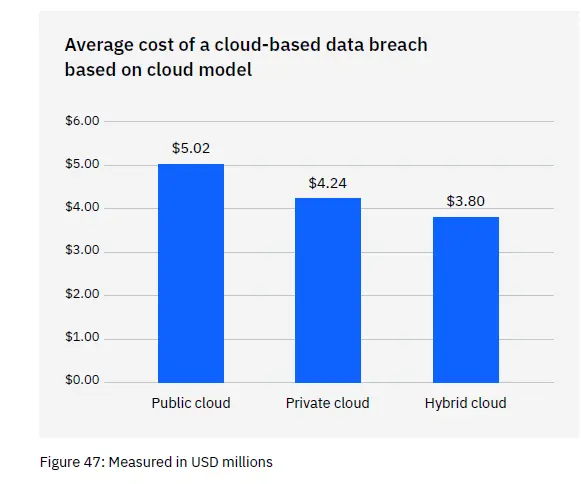
IBM’s data shows breaches in public cloud environments are costlier than those in hybrid setups. A hybrid cloud spreads workloads between public cloud and a private environment. Interestingly, the study also found hybrid beat private cloud on cost outcomes (IBM Security).
Create and Rehearse an Incident Response Plan
You don’t need to be a large enterprise to have an incident response (IR) plan. It’s simply a clear checklist for what to do in different security situations. For example, with ransomware, step one is to remove the infected computer or device from the network right away.
Teams that both document and practice their IR plan see big savings. On average, a well-rehearsed plan cuts breach costs by $2.66 million per incident (IBM Security).
Adopt a Zero Trust Approach
Zero trust isn’t one product. It’s a way of securing your business by limiting access and verifying users and devices continuously. Common pieces include:
- Two-step login (also called multi-factor authentication)
- Application safelisting (only approved apps can run)
- Context checks for users, such as device and location
About 79% of critical infrastructure organizations haven’t implemented zero trust yet. That gap is costly. Companies without zero trust pay roughly $1 million more per breach than those that have it in place (IBM Security).
Use Security AI and Automation
Tools that detect, investigate, and respond to threats automatically can dramatically change the math. According to IBM, organizations using security AI and automation reduced breach expenses by 65.2% (IBM Security). Examples include advanced threat protection and software that hunts for suspicious activity and kicks off a response without waiting on human input.
Where to Begin Strengthening Cyber Resilience
These are proven best practices. Tackle them step by step and build momentum. A managed IT provider can help you map out a roadmap, handle the quick wins first, and plan the longer projects.
For a fast win, turn on two-step login wherever you can. It’s affordable, simple to roll out, and it meaningfully lowers the chance of a cloud account breach. For a longer effort, formalize your incident response plan and schedule regular drills so your team can find and fix any gaps.
Want Help Reducing Risk?
Partnering with a trusted IT team takes a lot off your plate. If you’d like a clear, practical security roadmap for your business, get in touch.